

Infrastructure, where the work happens.
Edge is built for the environments outside the traditional data center — compact, resilient infrastructure that runs where your business actually operates.
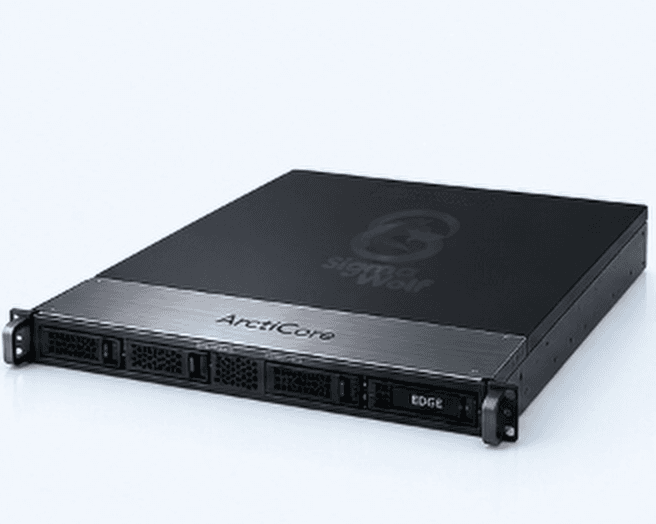
Distributed infrastructure doesn’t fit a data-center-shaped box.
Not every workload happens in a data center. Remote sites, industrial environments, and locations without traditional IT infrastructure still need reliable compute of their own — not a dependency on a connection back to somewhere else.
Edge exists to bring infrastructure to where the work actually happens, engineered to run unattended, in conditions general-purpose servers weren’t built for.
Where Edge tends to run.
These are common environments, not a fixed list of what Edge can do.
Edge applications
Software that needs to run close to where data is generated, not in a distant data center.
Remote infrastructure
Sites without dedicated IT staff or a traditional server room.
Localized services
Processing that needs to happen on-site, before data travels anywhere else.
Distributed environments
Many small deployments instead of one large centralized one.
Industrial/field deployments
Environments with dust, temperature swings, and limited physical access.
Network-adjacent compute
Infrastructure positioned close to where the network already reaches.
Compact. Distributed. Connected. Resilient.
Edge’s architecture starts from a different question than a data-center platform does: not “how much can we fit,” but “how little can we depend on.”
- Compact
- Distributed
- Connected
- Resilient
Low-latency sensor I/O & local processing
Unattended operation with cloud cache sync
Rugged short-depth continuous uptime
Every component brings a capability.
These aren’t line items on a shopping list. They’re the building blocks the engineering team draws on to assemble the system your environment actually needs.
Compute
Processing power sized for the site, not a data center rack.
Memory
Enough headroom for local processing without unnecessary overhead.
Storage
Local capacity for data that needs to be processed before it travels.
Networking
Connectivity engineered for intermittent or constrained links.
Power
Delivery engineered for sites without data-center-grade power infrastructure.
Cooling
Thermal design built for real-world environments, not a controlled server room.
The same discipline, engineered for the edge.
For Edge, understanding the workload means understanding the environment it has to survive in — not just the traffic it needs to handle.
Understand
Understand the site, the environment, and what the workload actually needs.
Architect
Determine the right footprint and system architecture for the location.
Engineer
Build the configuration around real-world operating conditions.
Validate
Check resilience, connectivity, and operational fit before deployment.
Deploy
Bring the system into an environment that isn’t a data center.
Support
Stand behind infrastructure that has to run unattended.
Evolve
Adapt as the site, the workload, or the network changes.
You envision. The components contribute. The Wolves engineer. ArctiCore brings it to life.
Who Edge tends to fit.
General patterns, not a customer list.
Field operations teams
Running compute outside a data center, in environments that weren’t built for servers.
Distributed retail or industrial sites
Needing local processing without a dedicated IT presence at every location.
Organizations extending centralized infrastructure
Bringing compute closer to where data is generated, without duplicating a full data center.
Edge is part of the ArctiCore family.
Platforms are engineered independently, but they’re not engineered in isolation.
Edge sites often pair with Nexus when they need to connect back into a broader, integrated environment.
Edge frequently sits alongside centralized infrastructure rather than replacing it.
Not sure if this is the right starting point?
Perfect. That’s what the Wolves are for.
Tell us what you’re trying to accomplish.
Let’s figure it out together.